Architecture
Overview
The library is built around Chats, Services, Tools, and Hooks.
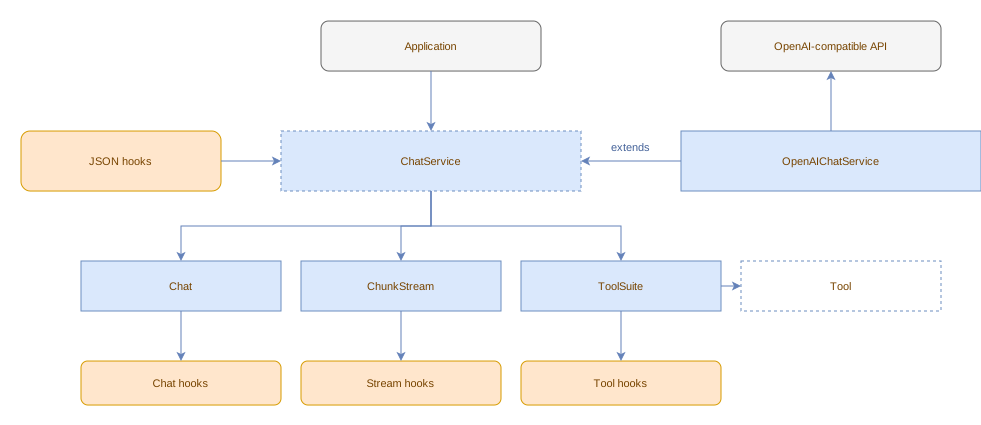
- Chat / ChatInterface - the public handle for building message histories and subscribing to chat events. Created by
service.chat(). - ChunkStream / ChunkStreamInterface - accumulates raw streaming chunks (content, reasoning, tool-call deltas, usage, finish) during
send(). Accessed viaservice.stream(). - ChatService - abstract base class that manages the tool-call loop. It owns the
Chat,ChunkStream, and tool registry. Callservice.send()to start the request/response cycle. - Tool - abstract base class that custom tools extend.
- ToolSuiteInterface - exposed via
service.tools(), lets callers add tools and attach hooks via.hook().before/after/error().do(). - Hooks - four kinds: stream hooks (
service.stream().hook().chunks().do()) for raw chunk observation, chat hooks (chat.hook().message().do()) for completed message observation, tool hooks (service.tools().hook().before/after/error().do()) for tool lifecycle events, and JSON hooks, declarative hooks defined in.jsonfiles that are auto-loaded on init/send.
Providers (like OpenAIChatService) extend ChatService and implement createStream() to connect to a specific API.