Stream hooks
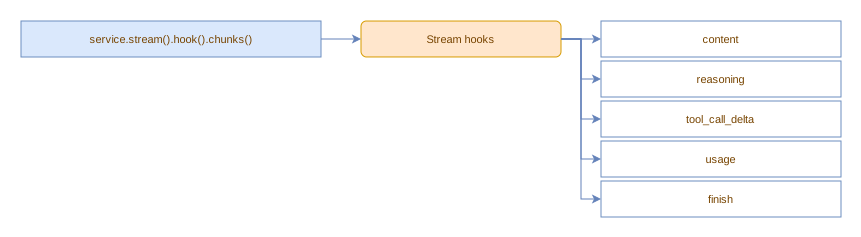
Stream hooks observe raw streaming output (content, reasoning, tool-call deltas, usage, finish). They are accessed through service.stream().hook().
// content chunks
service.stream().hook().chunks(ChunkType.Content).do((chunk) => {
    process.stdout.write(chunk.text);
});

// reasoning chunks
service.stream().hook().chunks(ChunkType.Reasoning).do((chunk) => {
    process.stdout.write(chunk.text);
});

// tool call delta chunks
service.stream().hook().chunks(ChunkType.ToolCallDelta).do((chunk) => {
    console.log(`Tool ${chunk.toolCallId}: ${chunk.text}`);
});

// usage chunk (emitted before the finish chunk when usage is requested)
service.stream().hook().chunks(ChunkType.Usage).do((chunk) => {
    console.log(`Tokens: ${chunk.usage.total_tokens}`);
});

// finish event
service.stream().hook().chunks(ChunkType.Finish).do((chunk) => {
    console.log(`\nFinished: ${chunk.finishReason}`);
});

// all chunk types
service.stream().hook().chunks().do((chunk) => {
    console.log(chunk.type, chunk.seq, chunk.batch);
});
.chunks() is always required in the chain. Pass one or more ChunkType values to filter, or no arguments to receive every chunk.
Each returns a Hook; call .dispose() to unsubscribe.
Stream hooks are fire-and-forget: async callbacks passed to do() are not awaited. Use them for observation and side effects (logging, display) that should not block the stream pipeline.
Chunk identity
Every chunk has two numeric fields:
seq: position within the current batch (0,1,2...). Resets to0on eachsend().batch: whichsend()cycle the chunk belongs to (1for the firstsend(),2for the second, etc.). Incremented automatically when the stream is cleared.
Use batch to distinguish chunks from separate send() calls when accumulating them manually.
Stream state
Access accumulated chunks and finish reason after send():
await service.send();
const allChunks = service.stream().chunks();
const reason = service.stream().finishReason();
The stream state (chunks, seq, batch) is automatically cleared at the start
of each send() call. Chunk listeners are preserved across sends; hooks
registered on the stream survive multiple send() rounds within the same
conversation. To fully remove stream hooks, call service.stream().clear() or
service.clear().
Summaries
Each provider round records a StreamSummary containing that round's aggregated
output. A send() that triggers tool calls produces one summary per round:
service.stream().clearSummaries();
await service.send();

const summaries = service.stream().summary();
// Each entry:
//   .content: content text from that round
//   .reasoning: reasoning text from that round
//   .toolCallCount: number of tool calls invoked in that round
//   .finishReason: why the round finished
//   .usage: token usage, when the provider reports it
//   .timestamp: when the summary was created

const lastRound = summaries.at(-1);                                                      // most recent round
const totalTokens = summaries.reduce((sum, s) => sum + (s.usage?.total_tokens ?? 0), 0); // all rounds
Summaries accumulate across multiple send() calls. Call service.stream().clearSummaries() to reset them without affecting chunks or hooks.
Ordering guarantee
When the stream finishes, the FinishChunk is pushed to the stream (and stream hooks fire) before the completed message is appended to chat (and chat hooks fire). This means stream hooks see the finish before chat hooks see the resulting message.